📄 Digital book in PDF · read it on your phone or print it
The four forces, engines and magnetos, the ISA, the TAF, the wind triangle, density altitude, mass and balance, VMC minima and hypoxia. Every topic has its own page: the drawing first, then what you need to remember. 66 illustrated pages.
🔒 Secure checkout · PDF by email · 30-day guarantee
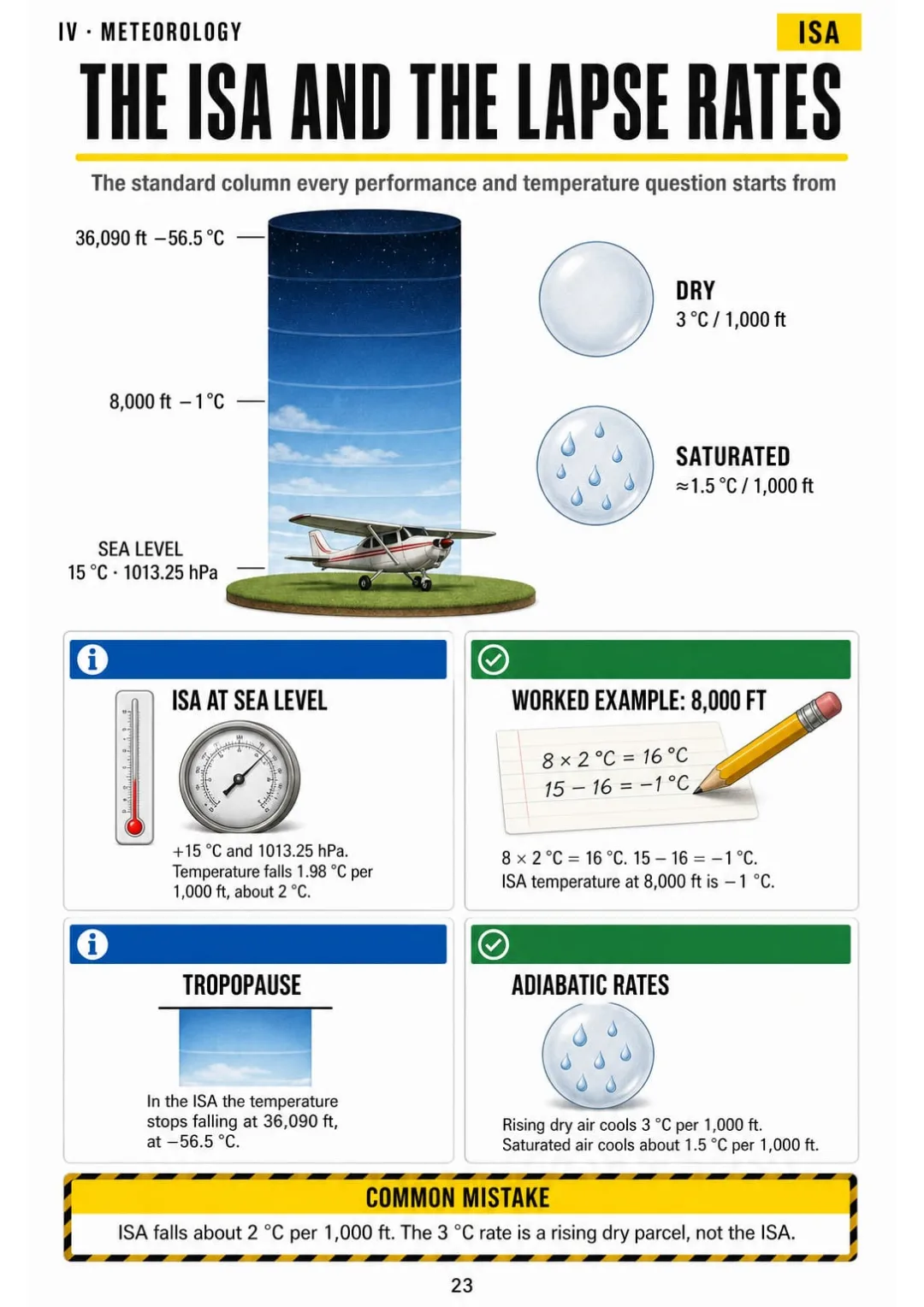
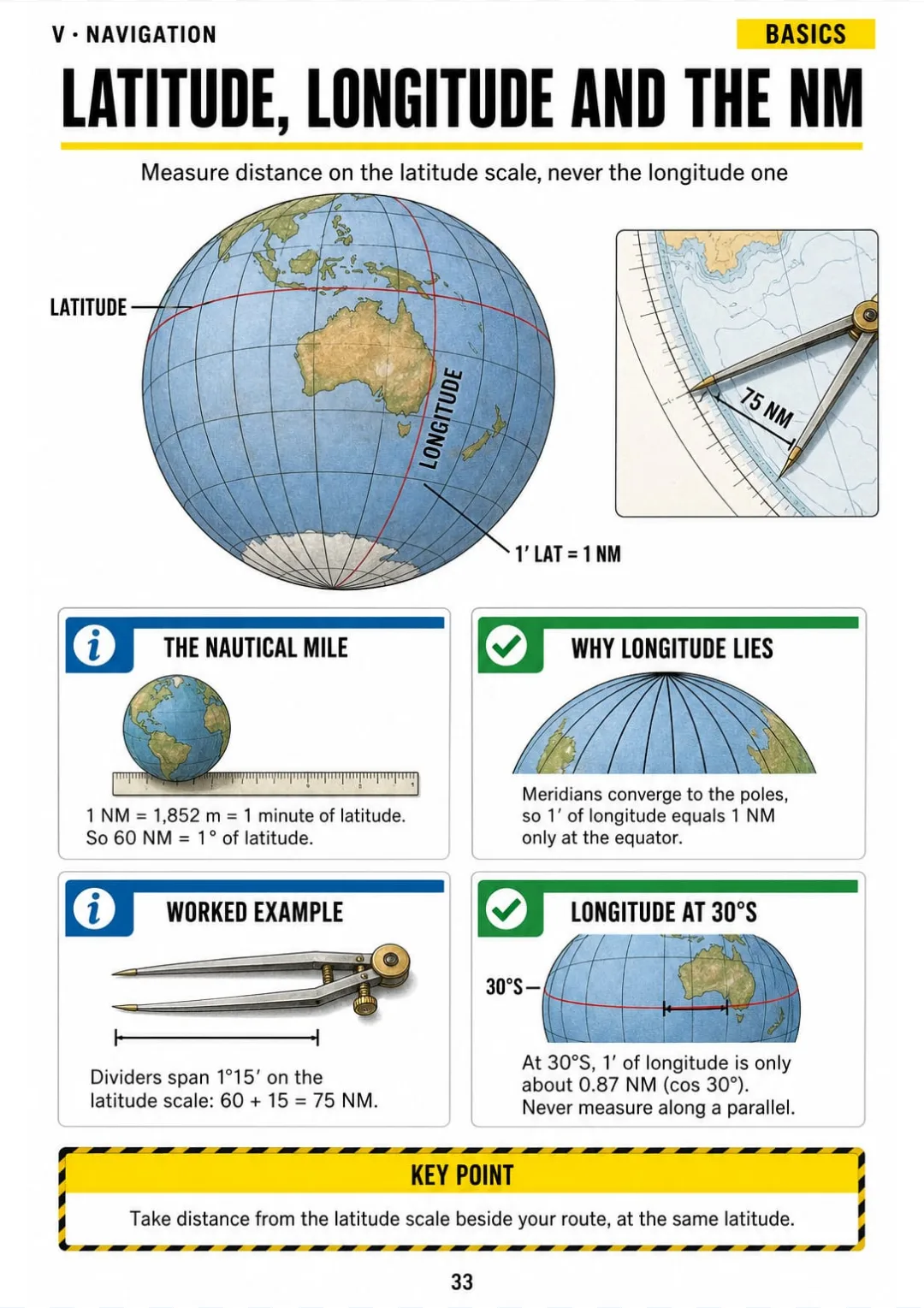
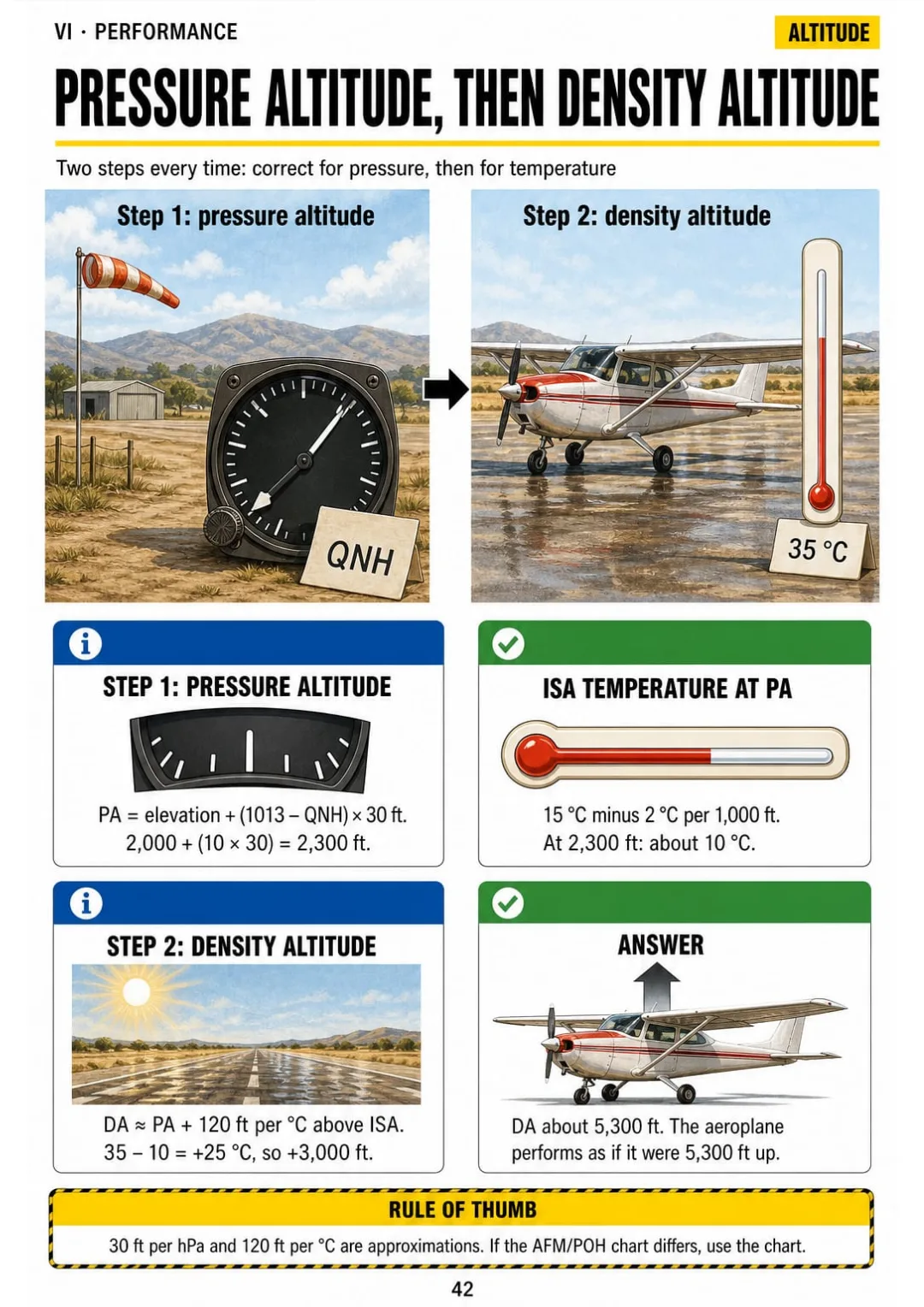
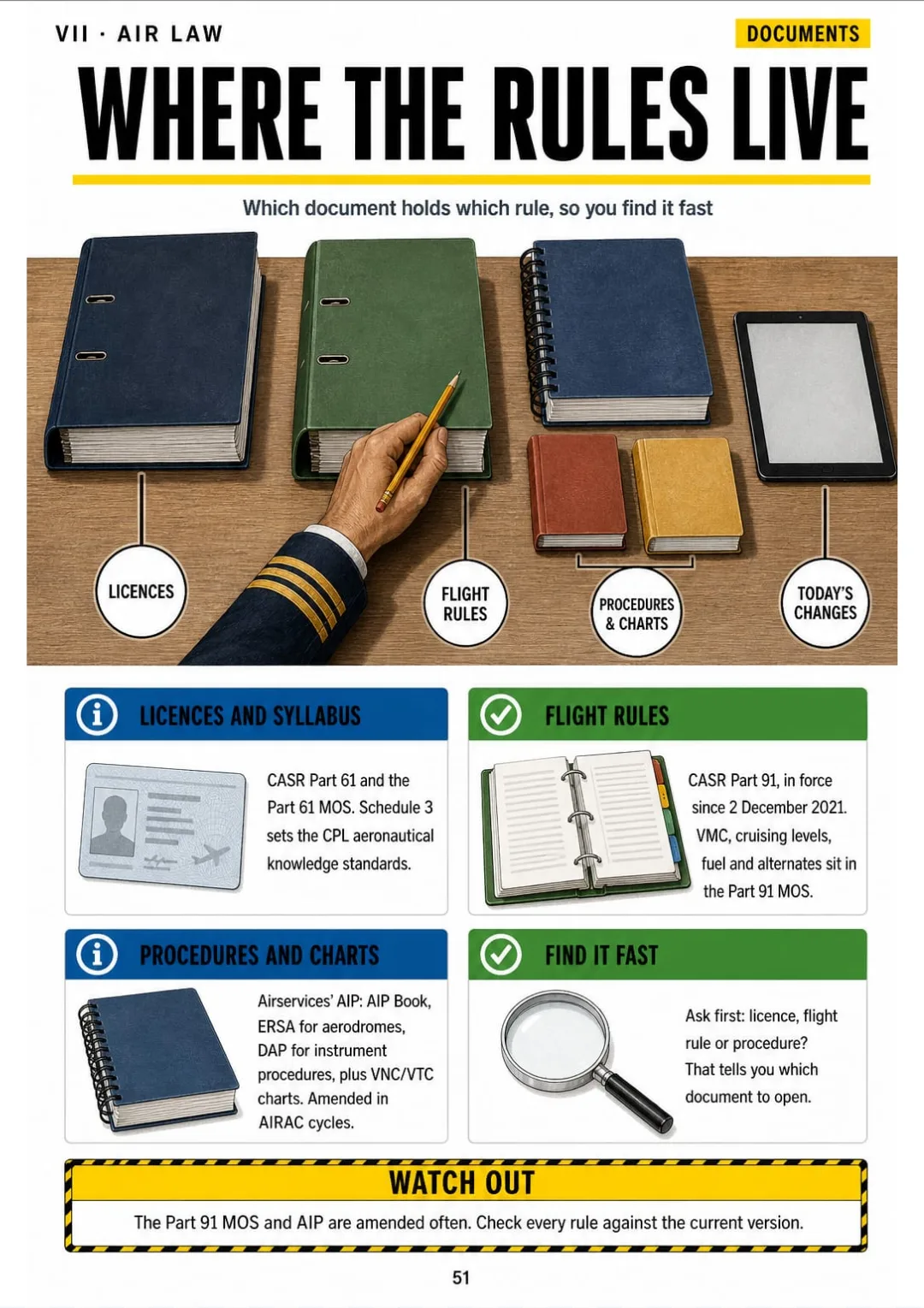
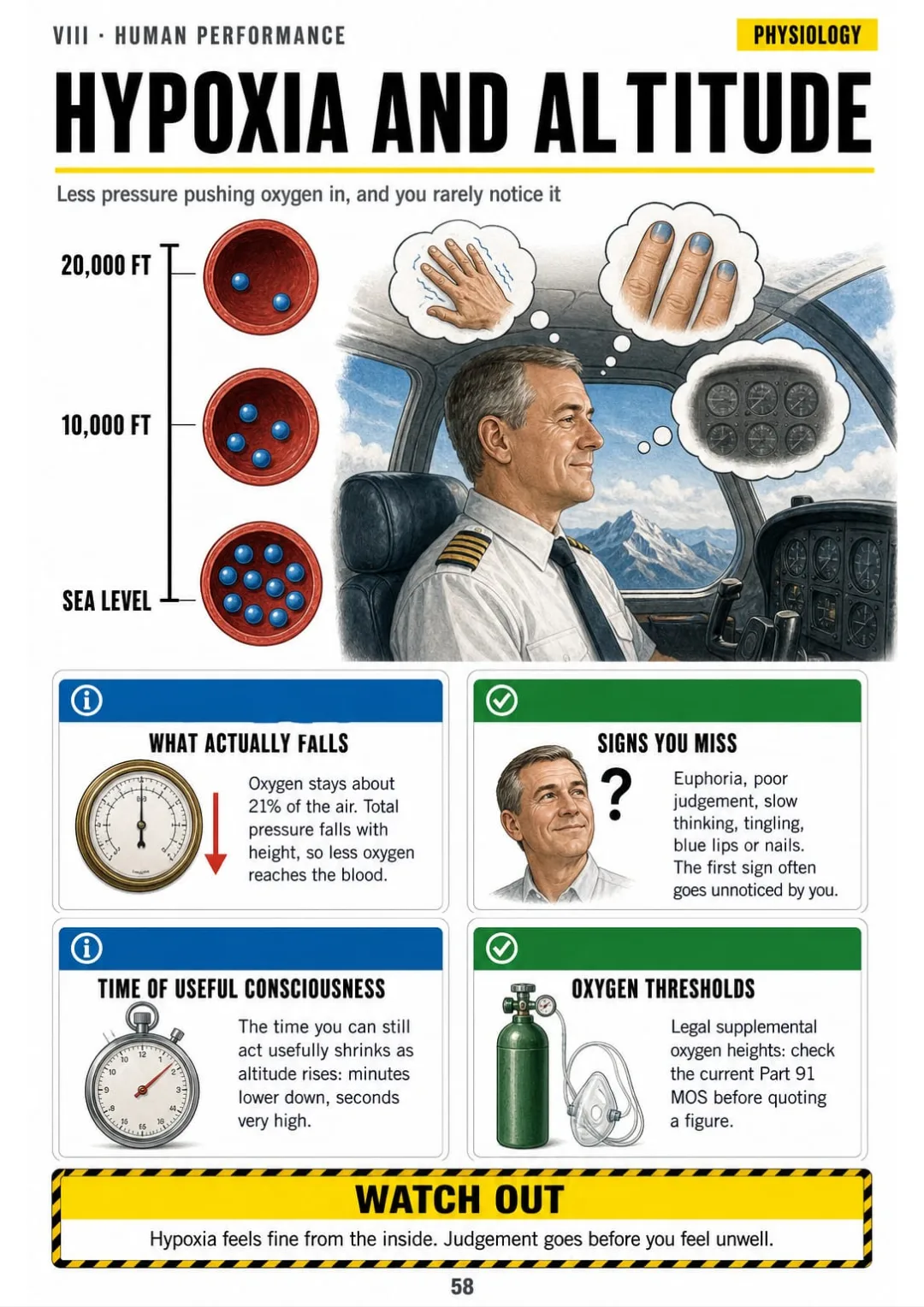
Every page has one big drawing and a box with the numbers, rules and steps you need to know:


Swipe to see more →
These are real pages from the book. The table of contents is the full one: 9 parts and 62 topics.
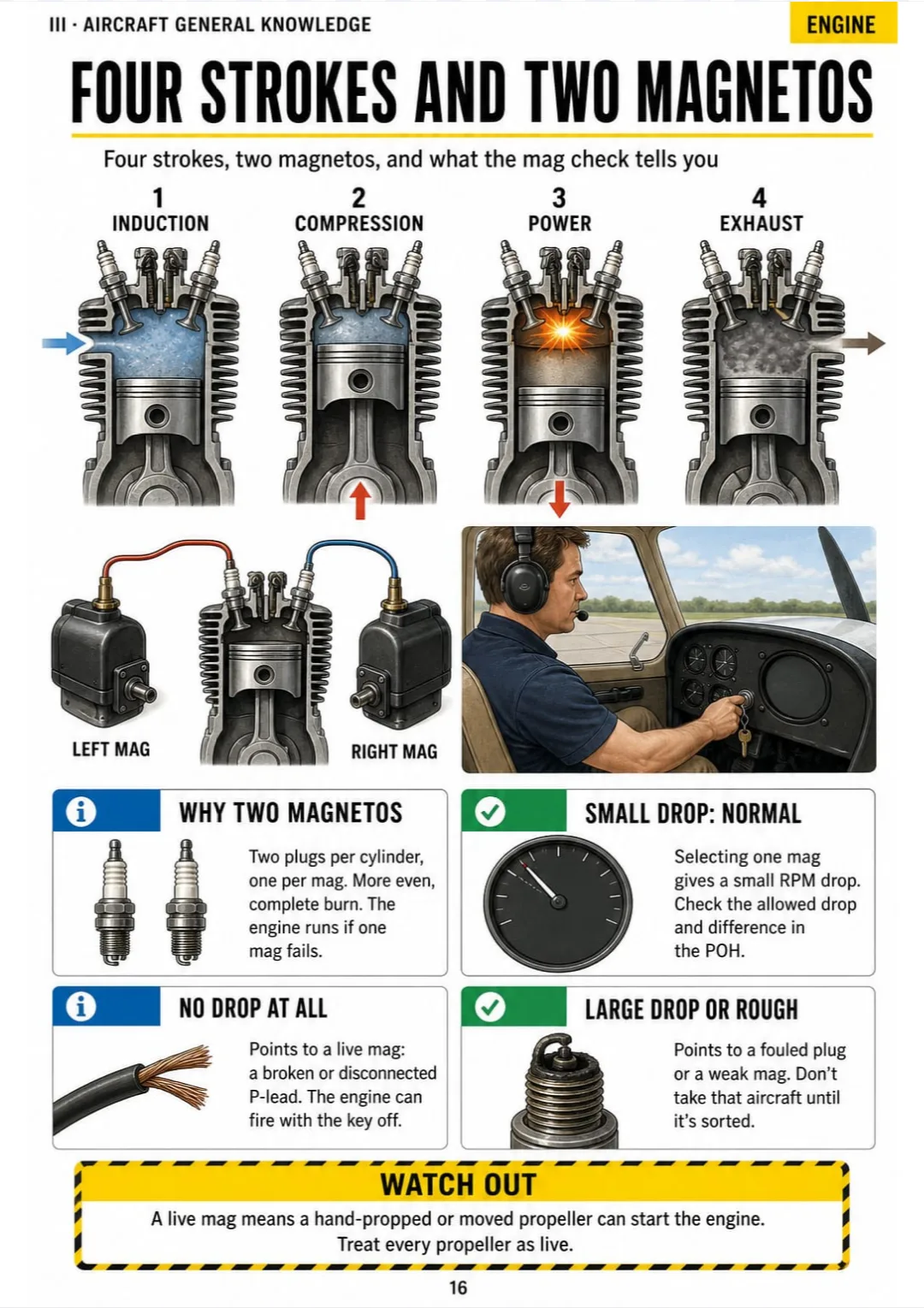
You're in the run-up bay with the instructor beside you. You switch to the left mag, the RPM doesn't drop at all, and he asks: what does that tell you?
You read about it last week. The manual covered the four strokes, the magnetos and the mag check in three dense paragraphs, with nothing showing how they fit together.

In the book, it's one page: the four strokes drawn as a cycle, the two magnetos each wired to its own set of plugs, and a box beside them: no drop at all means a mag isn't switching off; a large drop points to a fouled plug.
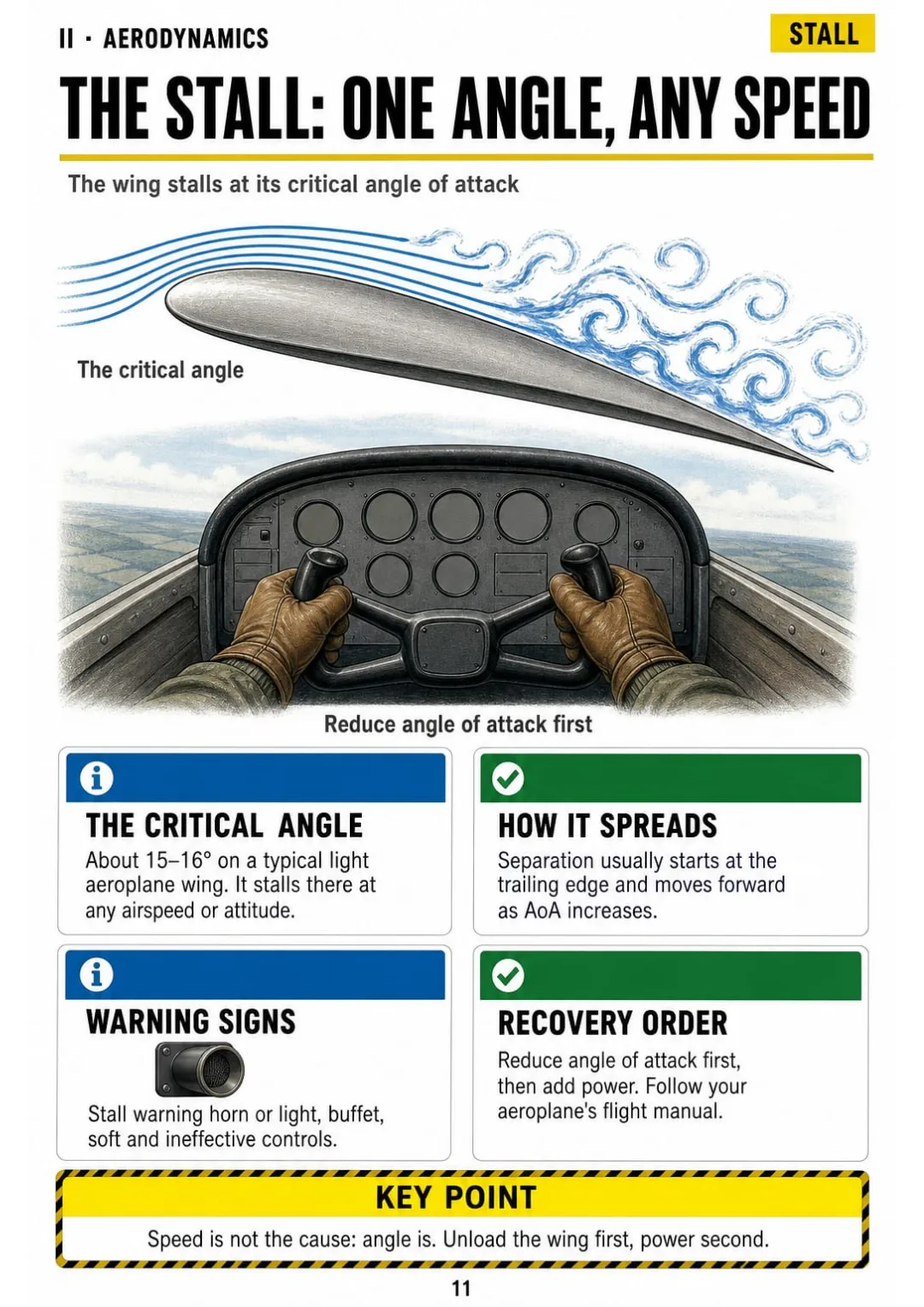
Every topic works the same way: the stall, the cold front, the wind triangle, density altitude and the CG each get their own page.
So in the run-up bay you picture the page, give your answer and carry on, without going back to the manual.

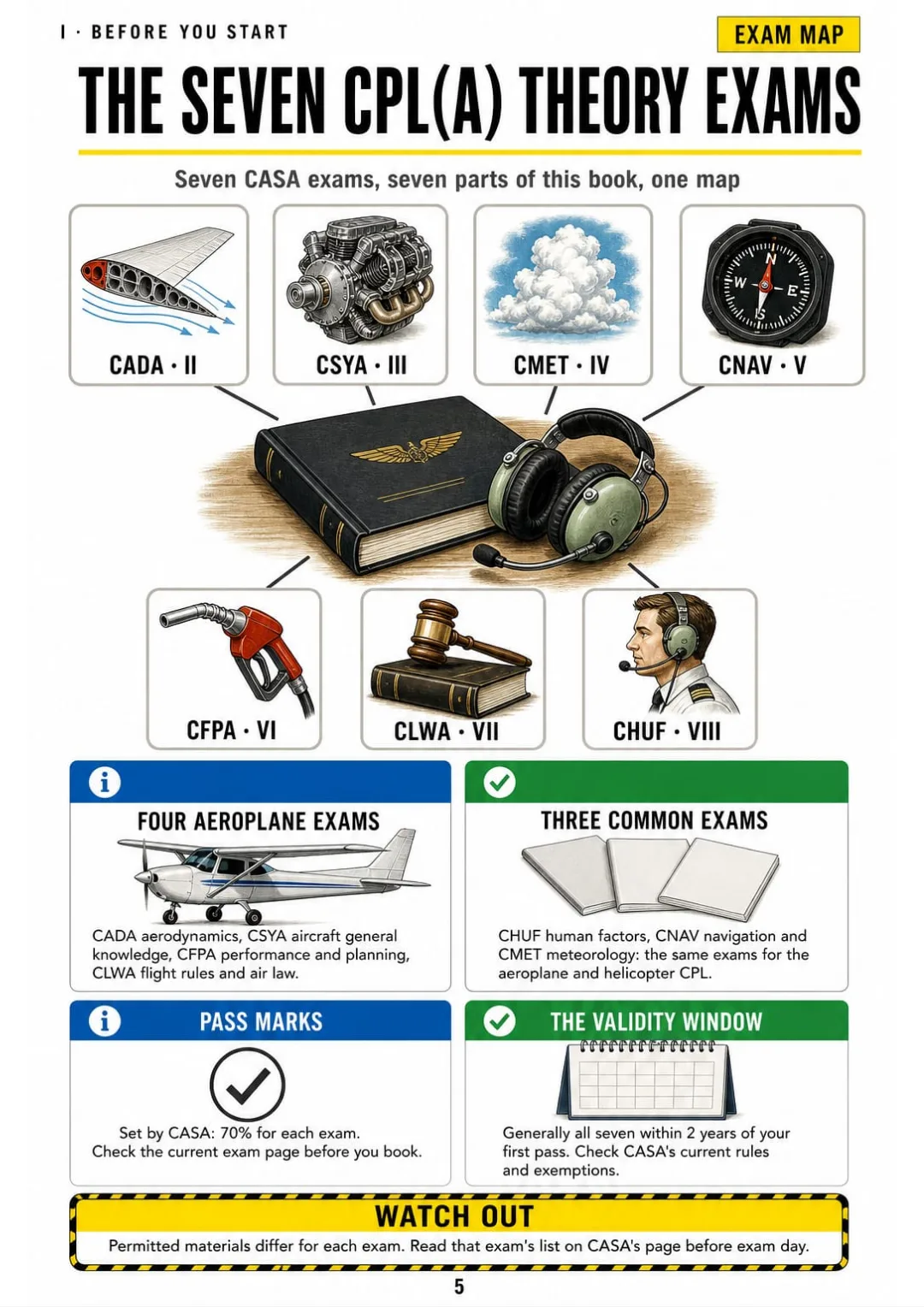
9 parts: the seven exams at a glance, aerodynamics, aircraft general knowledge, meteorology, navigation, performance and planning, flight rules and air law, human performance, and revision. 66 pages, all illustrated
Think of it this way:
It's the night before your navigation exam. A practice question gives you track 090 and a wind from 040 at 25 knots, and you need the heading and the groundspeed.
You open the page on the wind triangle: the triangle drawn from above, with track, heading and wind as three arrows, and the four flight computer steps right next to it.

Same with the TAF, the cold front, the take-off distance chart, the CG shift and the VMC minima: each one on its own page.
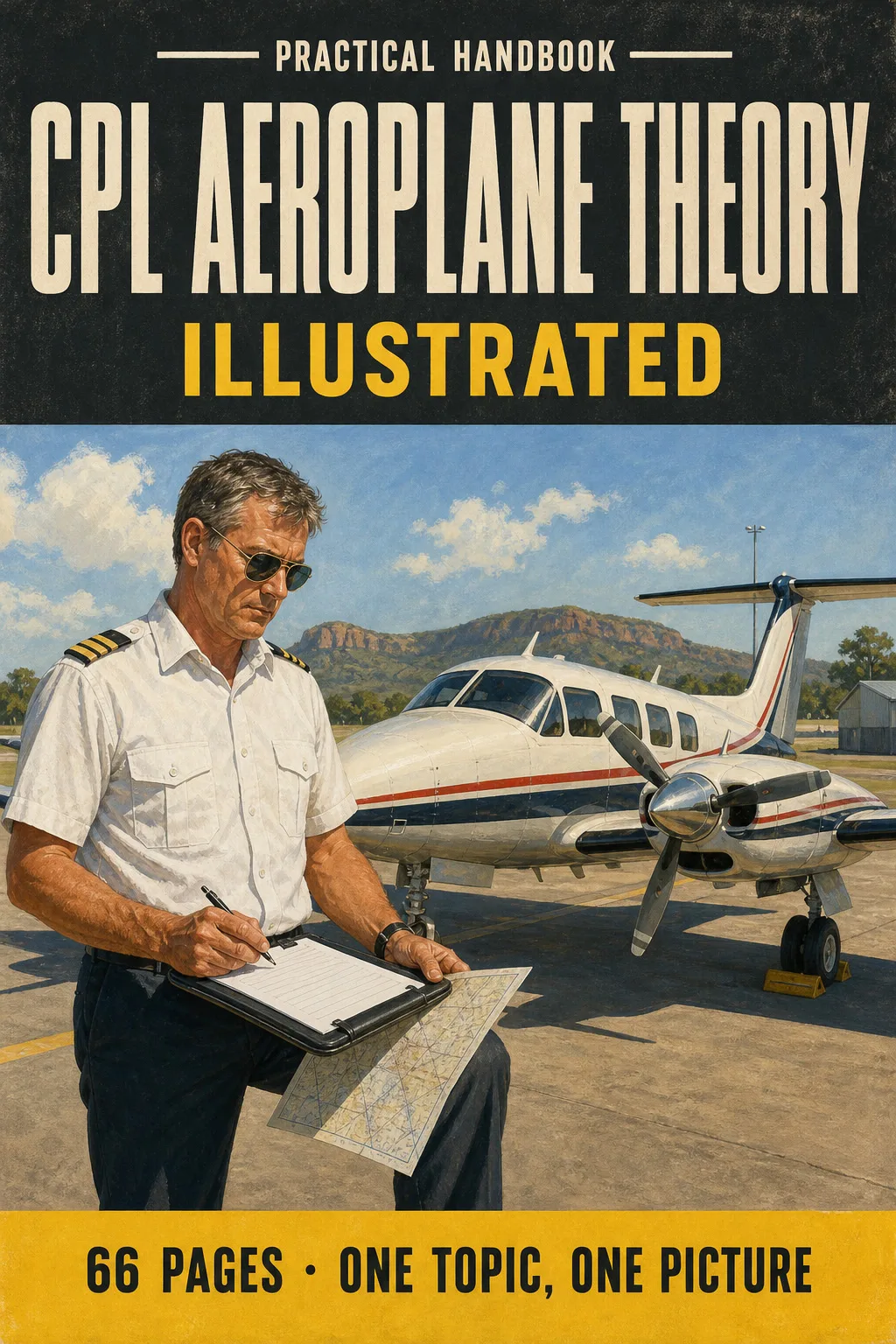
CPL Aeroplane Theory Illustrated is 66 illustrated pages in 9 parts, one topic per page, and it finishes with every calculation in the same order and a checklist for before each exam.
What you see drawn, you don't have to memorize.
The seven CPL(A) theory exams on one page, how every page works, and the units you'll actually use in Australia.
The four forces, the lift formula, angle of attack versus pitch, the stall, turns and load factor, the drag curve, stability and the CG, flaps and spin recovery.
The four-stroke engine and magnetos, mixture and detonation, carburettor icing, the constant speed propeller, pitot-static and gyro instruments, and the electrical system.
The ISA and lapse rates, stability and cloud, Southern Hemisphere wind, the cold front, thunderstorms, fog and icing, plus the METAR, the TAF and the GAF read in the same order every time, so a forecast stops looking like code.
Latitude and the nautical mile, true and magnetic, the wind triangle, both sides of the flight computer, the 1 in 60 rule, VNC, WAC and VTC charts, NDB, VOR and GNSS.
Pressure and density altitude, take-off distance charts, wind components, Vx and Vy, range and endurance, mass and balance, CG shift, fuel planning, PNR and critical point.
Where the rules live, CPL(A) privileges and medical, airspace classes, VMC minima, cruising levels, flight notification and SARTIME, right of way at non-towered aerodromes.
Hypoxia and altitude, spatial disorientation, vision and scanning, alcohol, medication and fatigue, and threat and error management.
Every calculation in the same order, the formulas and rules on one page, the most frequent working errors to check, and what to do before each exam.
At the end of the book: A revision part with every calculation in the same order, the formulas and rules on one page and a before-each-exam checklist.
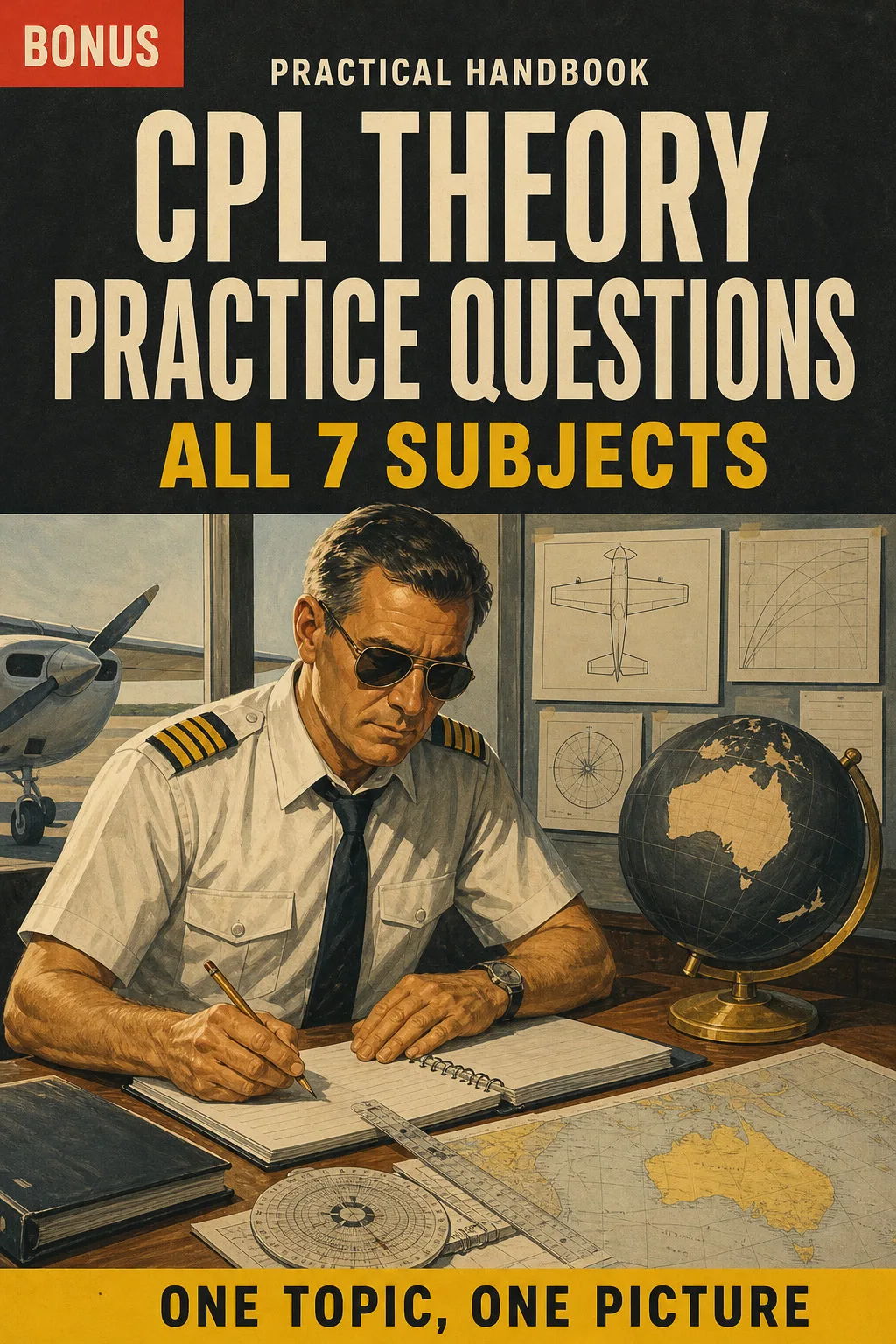
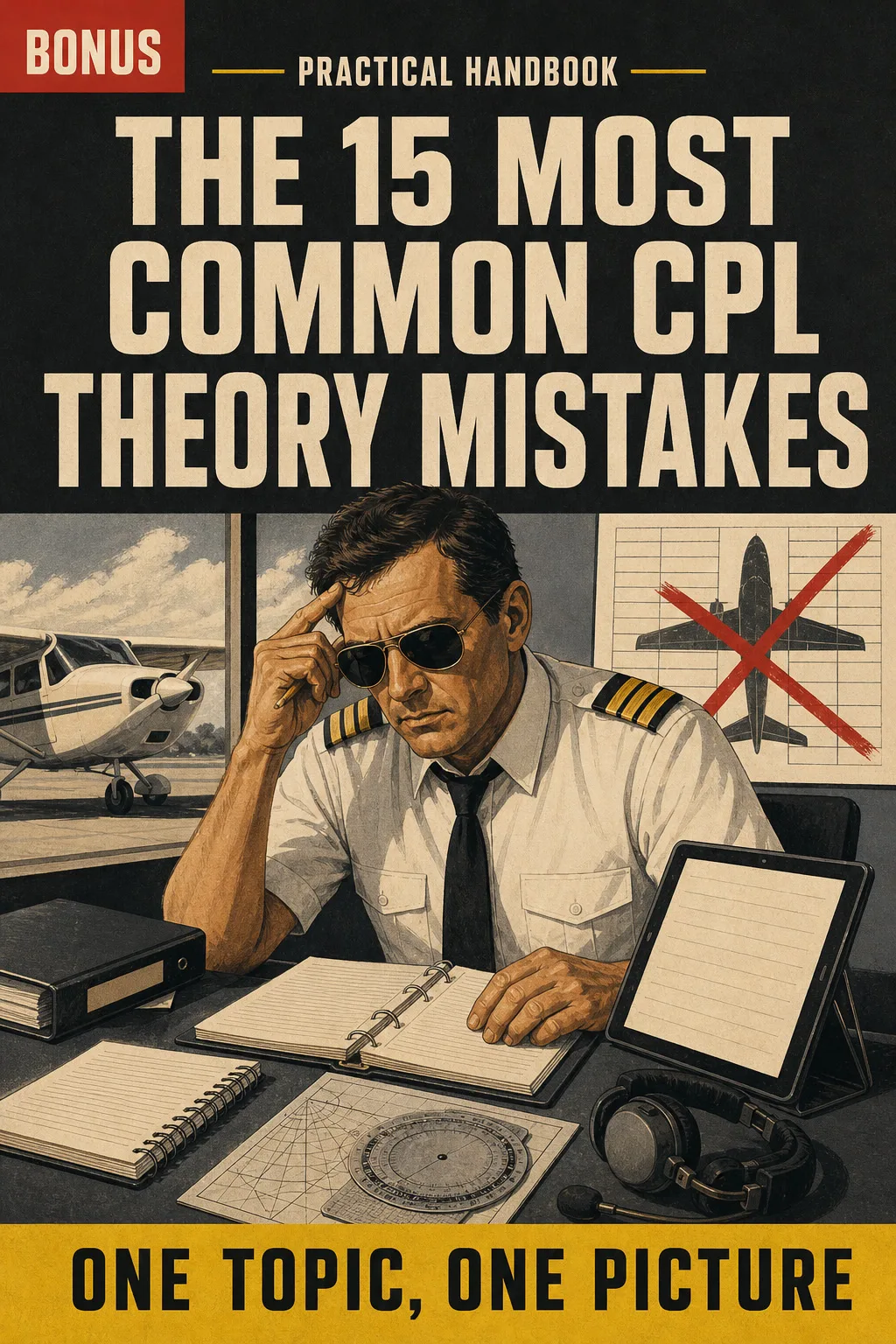
Exam-style multiple choice and numeric questions for each subject, with the working shown step by step, so you can check you can actually do it before you book the exam.

Fifteen frequent errors drawn before and after (wind applied the wrong way, true versus magnetic, the CG arm sign), so you can spot them in your own working.
📄 This is a digital PDF book sent to your email: nothing is printed or shipped.
PDF by email: We email you CPL Aeroplane Theory Illustrated as a PDF, together with the two free books. It's a single payment: no installments, no extra charges.
One topic per page, so a twenty-minute session after work actually finishes something. Every calculation follows the same steps, every time.
The revision part puts every formula and calculation on one page, and the practice questions show the working step by step, so you can check yourself before the day.
A quick refresh before a flight review or a new job: density altitude, the CG and the TAF, each on one page you can print and keep in your flight bag.
📄 This is a digital PDF book sent to your email: nothing is printed or shipped.
Try CPL Aeroplane Theory Illustrated for 30 days, bonus books included.
We refund everything if the file won't open, if the book isn't what you see here, if you were charged twice or if the email doesn't arrive. Just email us.
You pay once. No subscriptions.
Yes. It's written for pilots with a PPL (or finishing the hours) who study after work. It doesn't replace the theory manuals you already have: it sits beside them. Each topic is one page with the drawing, the numbers and the steps, so you can revise it in a short session and pick up exactly where you left off.
It's written for the Australian CPL(A) theory exams and checked against the Part 61 Manual of Standards (Schedule 3), CASR Part 61 and Part 91 with the Part 91 MOS, and the AIP Australia. It's not a US book adapted: units are the ones used in Australia (feet, nautical miles, knots, hPa, kilograms and litres), with no pounds or US gallons. Rules change, so every rule and figure names the document it comes from, and you can check it against the current amendment on CASA's website before your exam.
No. It's an independent study book: it doesn't issue a certificate and doesn't count as a ground school course or a theory exam credit. It's not affiliated with or endorsed by CASA, Airservices Australia or any flying school.
No. It's study material to understand and revise the theory. It doesn't replace your instructor, the aircraft flight manual or the regulations in force.
No. They're exam-style questions written for this book, with the working shown step by step. They are not official questions from any exam.
The book and the 2 free books arrive as PDFs by email, at the address you enter at checkout.
No. It's a one-off payment, with no subscription.
Yes. The PDF is ready to print at home or at a print shop, so you can take it to the aero club or keep it in your flight bag.
You have 30 days. We refund everything if the file won't open, if the book isn't what you see on this page, if you were charged twice or if the email doesn't arrive: just email us.
No more rereading with nothing sticking.
The mag check, the TAF and the CG: you see them drawn, and that's it.
You walk into each exam knowing where everything is.
Drawings make studying faster.
The book is right below.
One-time payment: US$ 27 · Guarantee: 30 days · PDF by email
YES, I WANT CPL AEROPLANE THEORY ILLUSTRATED FOR US$ 27📄 This is a digital PDF book sent to your email: nothing is printed or shipped.